
Authentic Listening Is Becoming an Important Data Source in Digital Music Promotion
As the volume of music content continues to grow, whether a release can obtain genuine plays has become an important standard for evaluating promotional quality. In its music listening operations, Legacy Keys Music Group treats authentic user activity as a core requirement of the task review process.
As the volume of music content continues to grow, whether a release can obtain genuine plays has become an important standard for evaluating promotional quality. In its music listening operations, Legacy Keys Music Group treats authentic user activity as a core requirement of the task review process.
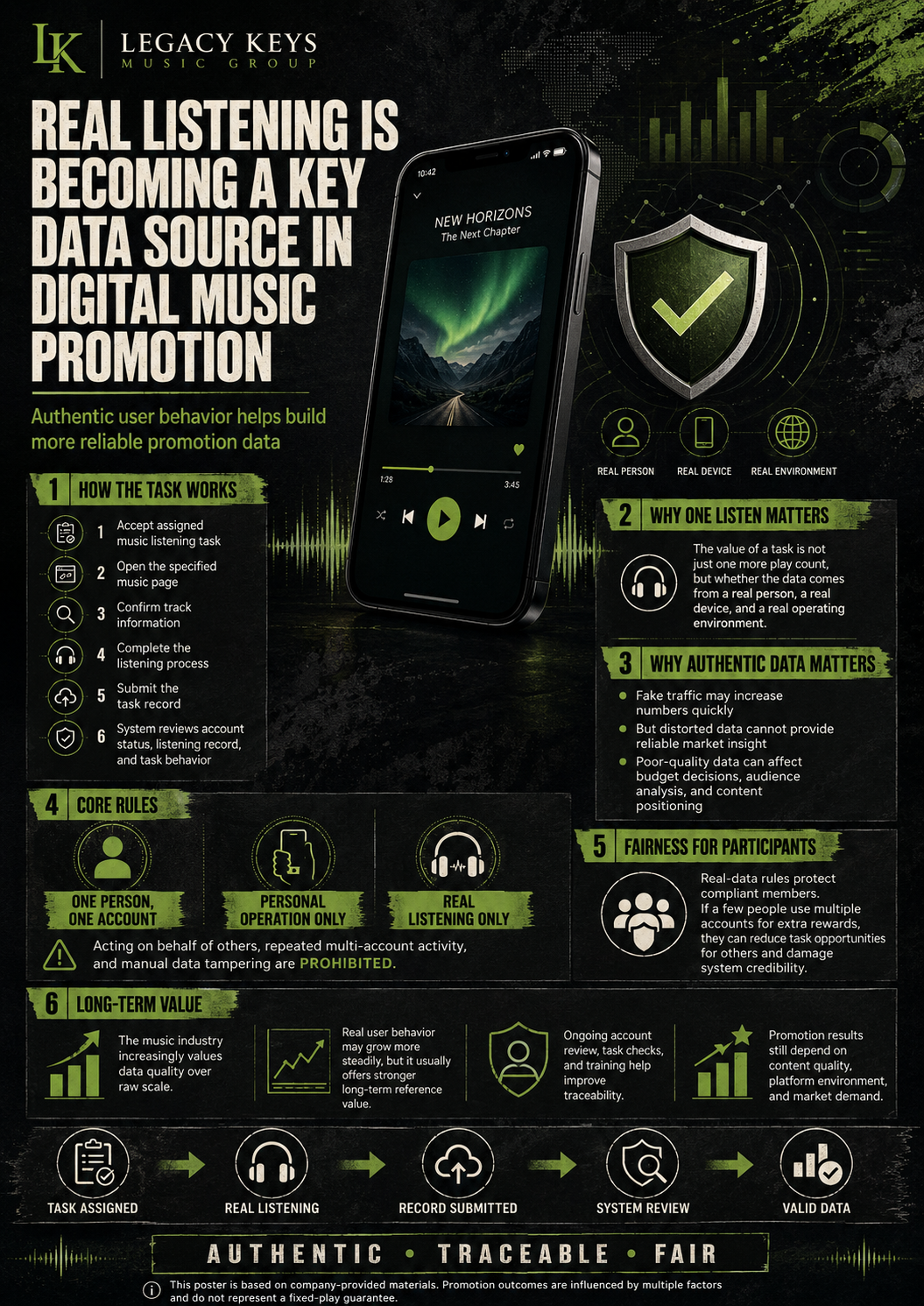
Under the platform’s procedures, participants who receive a task are required to access the designated music page, confirm the release information, and complete the listening process as instructed. After the task is submitted, the system also reviews the account status, listening record, and operating behavior to determine whether the data is valid.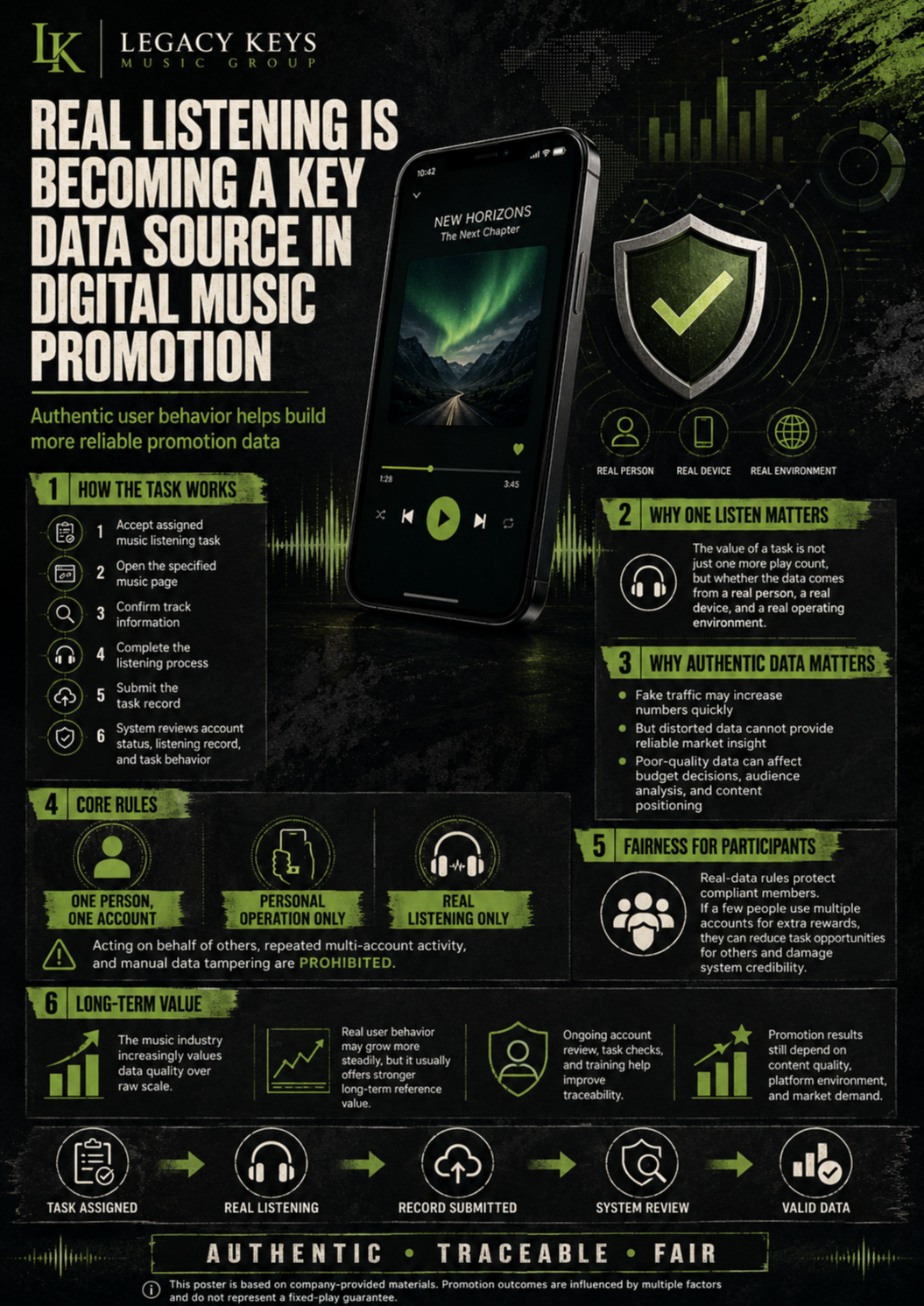
This means that the value of a listening task lies not only in adding one play to a numerical total, but also in whether the data comes from a real person, a genuine device, and an authentic operating environment.
LK believes that automated plays, bulk accounts, and fabricated data may increase numerical figures over a short period, but they cannot provide clients with a reliable basis for market analysis. For music creators and promotional clients, distorted data may affect future promotional budgets, audience analysis, and the positioning of a release.
For this reason, the company has established the basic principles of “one person, one account,” personal completion of tasks, and genuine listening. It prohibits participants from completing tasks on behalf of others, repeatedly operating through multiple accounts, or manually altering task data.
For participants, rules requiring authentic data also help maintain fairness. When a small number of individuals use multiple accounts to obtain additional compensation, they may reduce the normal task resources available to employees who follow the rules and weaken the credibility of the entire task system.
The digital music industry is increasingly placing greater emphasis on data quality rather than numerical scale alone. Although authentic user activity may grow at a relatively steady pace, it generally provides greater reference value in long-term promotional campaigns.
LK states that it will continue improving the traceability of music listening data through account reviews, task inspections, and employee training.
Promotional results may still be affected by factors including the quality of the release, platform conditions, and market demand. Therefore, the company does not guarantee any fixed playback or promotional outcome.