
Obamacare beat its opponents for years. Now a flaw in its text could be its undoing
Obamacare beat its opponents for years. Now a flaw in its text could be its undoing
Free daily briefing on global business news.
A hard income cutoff written into the Affordable Care Act resurfaced this year. Families just above the line now owe thousands more for coverage
Nathan Posner / Anadolu via Getty Images
The Affordable Care Act, also known as Obamacare, has survived everything its opponents have thrown at it. Courts tried to strike it down. Congress voted more than 60 times to repeal it. The Trump administration cut off billions in insurer payments. Each time, the law's defenders found a way to protect it.
The crisis hitting the ACA marketplace in 2026 is different. No court ordered it. No president vetoed funding. No Senate vote dismantled a provision. Premiums are climbing past $2,000 a month for middle-income families because of a flaw in the law's own design, exposed when Congress let a temporary fix expire.
Every previous threat had a countermeasure. This one has none.
Twenty-six states asked the Supreme Court to strike the whole law down in 2012. The Court upheld it, 5-4, in a ruling that surprised observers who expected the law to fall. Three years later, in King v. Burwell, challengers argued that a four-word phrase in the statute meant subsidies could only flow through state-run exchanges. The Court ruled 6-3 that subsidies applied everywhere, warning that the alternative reading would destabilize insurance markets and create the very death spirals the law was meant to prevent.
In 2021, the Court dismissed the last major constitutional challenge on standing, effectively closing the door on judicial threats. The House voted more than 60 times to repeal the law between 2011 and 2016 without succeeding. In 2017, a skinny repeal that would have gutted coverage mandates failed in the Senate 49-51. One vote the other way and Congress would have dismantled the law's core.
The Trump administration tried to undermine the law directly. When it cut off cost-sharing reduction payments to insurers in 2017, carriers responded with a workaround called silver loading. They raised silver plan premiums to compensate, and because subsidies are pegged to silver plan prices, the higher premiums paradoxically generated larger subsidies for many enrollees.
When Congress eliminated the individual mandate penalty through the 2017 Tax Cuts and Jobs Act, the Congressional Budget Office projected that 13 million more people would go uninsured. The marketplace shrank but didn't collapse. By early 2025, 24.2 million people had enrolled, more than double the 2021 figure. But that growth depended on temporary subsidies.
While the enhanced credits were in effect, nobody noticed the hard income limit Congress wrote into the original law in 2010. Under the ACA as designed, subsidies vanish entirely above roughly $63,000 for a single person. There is no gradual phase-out. One dollar above the line and the help disappears completely.
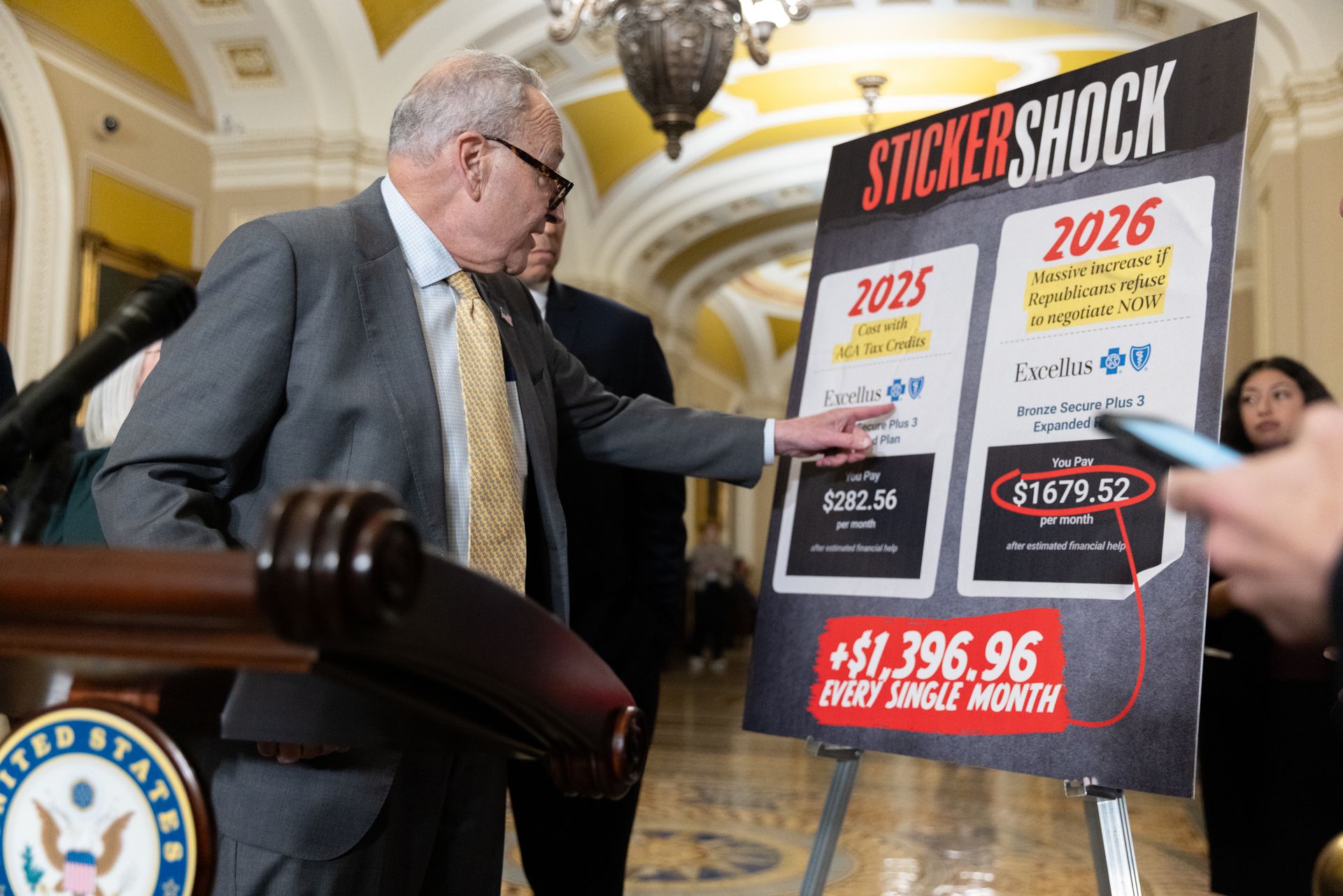
Through the enhanced credits, Congress eliminated the cutoff and capped premiums at 8.5% of income regardless of earnings. When lawmakers let the credits expire at the end of 2025, everyone earning above $63,000 lost their subsidies overnight. A 60-year-old in Cheyenne, Wyo., earning $65,000 a year now faces an annual premium of $26,180, or 40% of income, according to the Urban Institute.
The ACA's defenders can't fight this the way they fought court challenges or repeal votes. Because there is no opponent to defeat. The subsidy cliff is the law itself, the same statute that the Supreme Court upheld and that Congress chose not to repeal. CBO projected in June 2025 that the credit expiration, combined with a 2027 federal rule that raises out-of-pocket costs and tightens enrollment requirements, would leave 5.1 million more people uninsured by 2034. The credit expiration alone accounts for 4.2 million.
In overcoming court challenges, repeal votes, and deliberate sabotage, the ACA's defenders proved that external threats can be defeated. But none of those defenses apply when the problem is the law's own subsidy structure reverting to its original form.
The 2026 numbers already show what happens. Average monthly premiums have risen 58% in 2026, from $113 to $178, according to KFF, while average deductibles have climbed 37% to a record $3,786. The number of people maintaining coverage could fall from 22.3 million in 2025 to as low as 16.5 million. Healthier enrollees are leaving, and the remaining pool is getting sicker, so insurers are raising premiums to cover the difference.
Each round of that cycle makes the next one worse. For the millions of people who can no longer afford marketplace coverage, there is no mechanism inside the law to bring their premiums back down.
Join 500,000+ readers who start their day with Quartz.
By subscribing, you agree to our Terms of Service and Privacy Policy.
Global business news for a smarter world
© 2026 Quartz Media, Inc. All rights reserved.