
Skipping health care to save money costs the U.S. billions more later
Skipping health care to save money costs the U.S. billions more later
Free daily briefing on global business news.
Unaffordable coverage is pushing Americans to forgo care they'd otherwise get. Untreated conditions add a lasting financial burden to the system
Erin Clark for The Boston Globe via Getty Images
Many Americans skip doctor visits, delay prescriptions, and put off screenings every year because they can't afford them. More than a third of adults went without needed care in the past year, according to KFF, and the number is rising as marketplace premiums climb and millions lose or downgrade coverage.
The more than a million people who dropped marketplace coverage this year, and the millions more who saw their premiums jump by double digits, are now the ones most likely to skip a mammogram, stop filling a prescription, or put off a doctor's visit until a manageable problem becomes an emergency. Across every condition researchers have studied, people who delay care cost the healthcare system more than people who get treated on time.
"A screening that gets skipped or a therapy that gets paused rarely stays contained to a single moment," said Jennifer Noonan, vice president of clinical strategy at Accessia Health. "It resurfaces later as a preventable complication, a condition that has advanced further than it should have, or a recovery that is longer, harder, and more expensive."
Whether someone gets screened for cancer depends largely on whether they can afford to. Uninsured women are 41% less likely than women with adequate coverage to get a mammogram and 47% less likely to get screened for colorectal cancer, according to a study in BMC Public Health. Uninsured men are 52% less likely to be screened for colorectal cancer. Even women who have insurance but face high out-of-pocket costs are 6% less likely to get a mammogram than women with full coverage.
People make the same calculation about prescriptions. More than four in ten adults reported not taking their medication as prescribed in the past year because of cost, according to KFF. Uninsured adults were more than three times as likely as those with private insurance to skip doses, delay fills, or take less than prescribed, according to a CDC data brief.
Even people who technically have coverage face the same pressure. Almost a quarter of insured working-age adults were underinsured in 2024, meaning their plans left them with out-of-pocket costs high enough to discourage care, according to the Commonwealth Fund's 2024 health insurance survey. Mike Smith, president emeritus of The Brokerage Inc. and a health insurance expert, has described the current ACA market as offering "catastrophic coverage disguised as comprehensive insurance."
Skipping screenings comes with a price. First-year treatment for Stage 1 prostate cancer costs $7,640 compared to $58,783 when caught at Stage IV, according to a study of more than 597,000 Medicare beneficiaries. For stomach cancer, Stage IV treatment reached $156,982 in the first year alone. The gap between early and late diagnosis persists for at least five years.
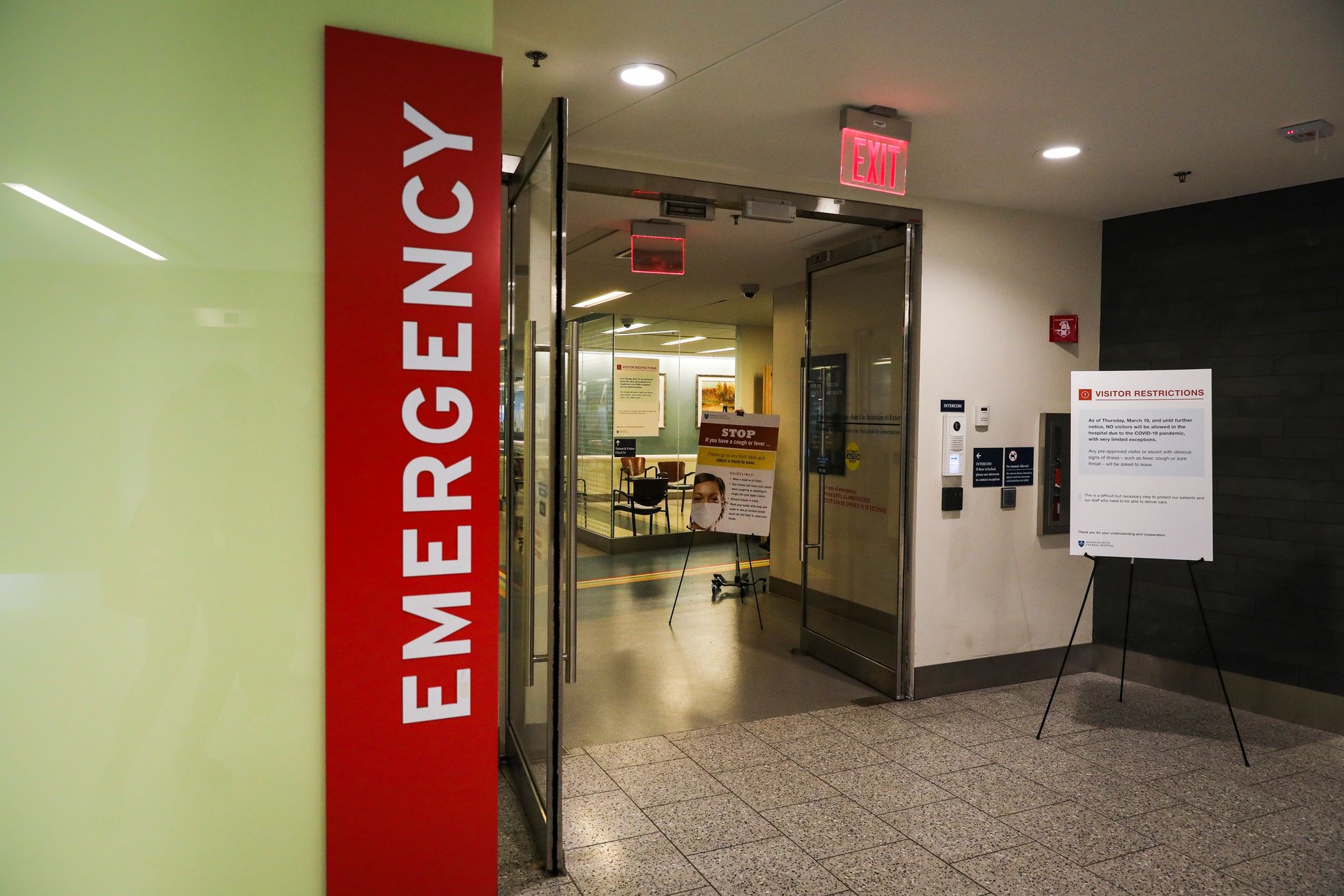
When people can't afford a doctor, they go to the emergency room. Between 13% and 27% of ER visits could be handled in a doctor's office or urgent care center, according to the Agency for Healthcare Research and Quality, at a savings of $4.4 billion a year. Many of those patients had conditions that worsened without earlier treatment. The 41% of U.S. adults who carry some form of medical or dental debt have an even harder time getting care. They're more than twice as likely to put off additional care, according to a 2022 KFF survey, and half of adults with medical debt said cost had prevented them from getting a test or treatment a doctor recommended.
At the system level, the U.S. health care system spends between $100 billion and $300 billion a year on avoidable complications from skipped medications. That range represents 3% to 10% of total U.S. health care spending.
The strongest evidence that coverage reverses this cycle comes from the Oregon Health Insurance Experiment, which selected low-income adults by lottery to receive Medicaid. Those who got coverage used more preventive care, owed less in medical debt, and reported better physical and mental health. People who received coverage were 25% less likely to have unpaid medical bills. Researchers studying Medicaid expansion in three states found a 6.1% reduction in mortality.
When coverage becomes unaffordable, people don't stop needing care. They stop getting it on time. Hospitals treat the cancers that screenings would've caught earlier, and insurers cover the complications that daily medication would've prevented. Everyone still in the system pays for it.
Join 500,000+ readers who start their day with Quartz.
By subscribing, you agree to our Terms of Service and Privacy Policy.
Global business news for a smarter world
© 2026 Quartz Media, Inc. All rights reserved.