
A million Americans dropped health coverage. Now everyone else is paying for it
A million Americans dropped health coverage. Now everyone else is paying for it
Free daily briefing on global business news.
Health insurance costs keep rising as healthier customers exit the marketplace. A decades-old collapse pattern is repeating in real time
Andrew Harnik / Getty Images
More than a million Americans have dropped health insurance since Congress let enhanced premium subsidies expire at the end of last year. Most were young and healthy.
Coverage costs more now that the healthiest customers have left. Insurers raised premiums to keep up, and those higher premiums pushed out the next healthiest slice of enrollees, worsening the pool again. The process, as economists David M. Cutler and Richard J. Zeckhauser documented in a 1998 research paper for Harvard University, continues until a generous plan "empties completely" and no amount of premium increase can sustain it.
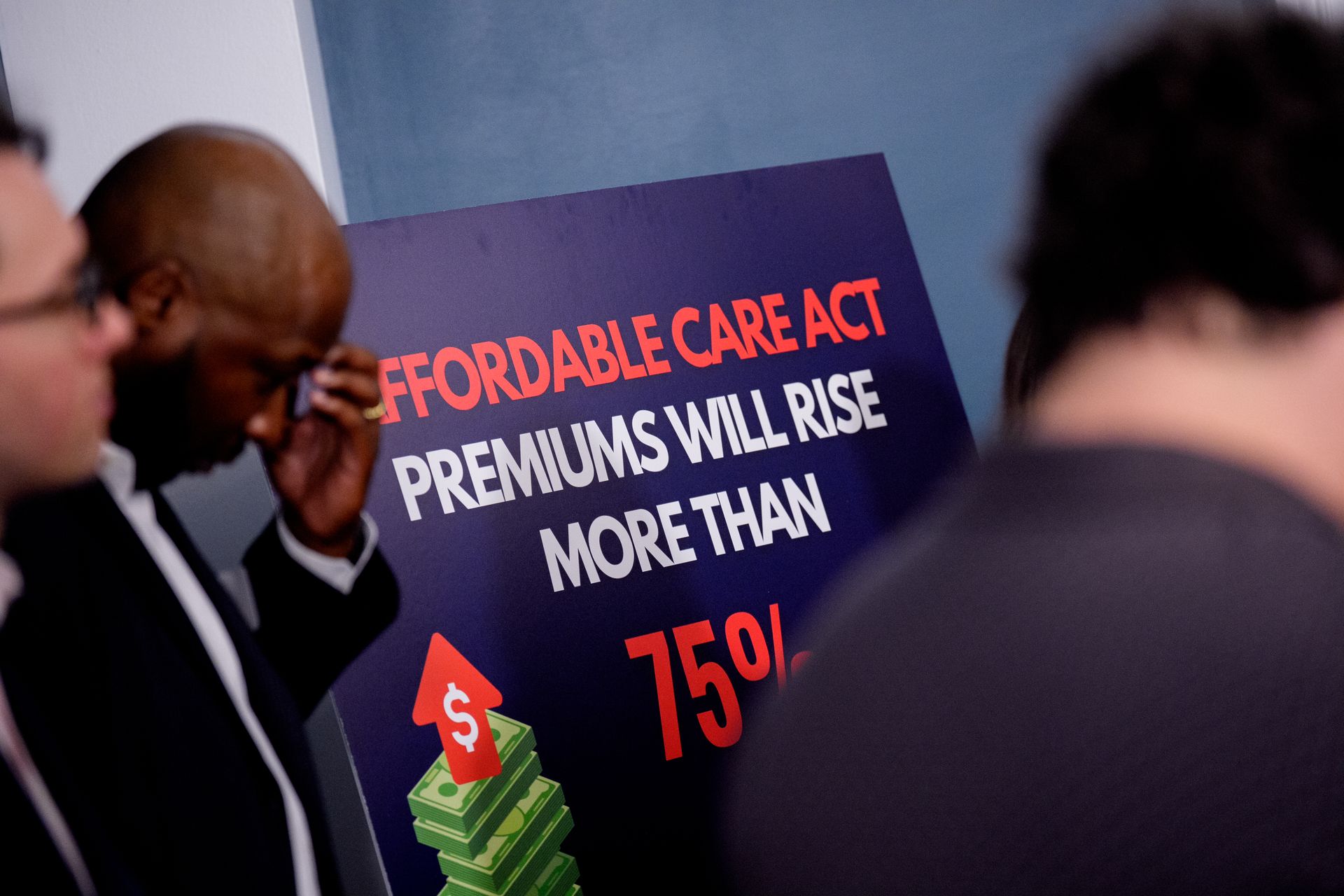
This "adverse selection death spiral" drove insurers out of state markets across Washington, Kentucky, and several other states in the 1990s. The Affordable Care Act added subsidies and a mandate to prevent it from happening nationally, but with those protections now weakened, marketplace insurers have proposed double-digit premium increases for 2027.
The same cycle is repeating itself again.
In the 1990s, several U.S. states enacted insurance reforms that triggered death spirals in their individual markets. Washington state passed sweeping health care legislation in 1993 requiring insurers to sell policies to everyone regardless of health status. The law, known as guaranteed issue, also required residents to buy coverage. The state legislature repealed the mandate in 1995, and without a mandate to bring healthy people in, premiums climbed and insurers absorbed losses they couldn't recover through rate increases. By November 1998, only three carriers remained, and they stopped selling new individual policies before the year was out.
Individual insurance markets collapsed in at least eight states that required insurers to sell to everyone at the same price regardless of health, according to a Milliman study. Kentucky's individual market lost more than 40 carriers by January 1998, and the state repealed its guaranteed-issue rules entirely, as did New Hampshire. Washington weakened its own provisions.
None of them had required healthy people to buy coverage. Without a mandate, people could wait until they got sick to enroll and drop out when they recovered. The pool that remained was made up of the costliest patients.
Harvard triggered the same process in 1995. After giving every employee the same flat dollar amount toward whichever health plan they chose, Harvard watched as its healthier workers switched to cheaper plans. Enrolment for the most expensive coverage dropped from 20% to 15% in the first year.
Employee contributions for that plan jumped from about $500 in 1994 to roughly $1,000 in 1995, and passed $2,000 in 1996. At the same time, enrolment fell to just 9%. By the start of the 1997 rate negotiation period, the plan couldn't break even, and Harvard discontinued it.
Whether the spiral reaches total collapse depends on how sensitive people are to premium increases. If most enrollees will pay almost any price to keep coverage, the market may stabilize at a higher cost with fewer members. If enrollees are highly price-sensitive, the spiral accelerates toward zero. As a Casualty Actuarial Society analysis put it, total collapse "does not always occur" but hinges on the relationship between premium changes and the willingness of healthier people to walk away.
Massachusetts was experiencing the same adverse selection in its individual market when, in 2006, the state enacted reform requiring residents to buy coverage or pay a penalty. Younger, healthier residents started buying coverage, and lower-income residents received subsidies to help cover the cost.
Premiums and average costs fell after the mandate took effect, according to a study by economists Martin Hackmann, Jonathan Kolstad, and Amanda Kowalski. The researchers estimated that bringing healthier people into the pool alone saved $51.1 million a year across the Massachusetts market.
The ACA applied the same requirements nationally, adding subsidies and a mandate. Removing the mandate would've driven healthier enrollees out of the market at higher rates than sicker ones, pushing premiums for individual policies up by 15% to 20%, the Congressional Budget Office projected.
After Congress let those subsidies expire at the end of 2025, a 40-year-old in Indianapolis earning $65,000 a year suddenly saw monthly marketplace premiums jump from $316 to $477, according to Peterson-KFF. More than 321,000 other people above the subsidy cutoff dropped coverage entirely.
Insurers are raising prices to cover customers who use more care. In filings for 2027, they're proposing a median premium increase of 15%, the second straight year of double-digit hikes. Insurers estimate that the departure of healthy customers alone is adding about four percentage points a year to premiums on top of rising health care costs.
For at least one major carrier, raising prices wasn't enough to stay in the market. Health insurer Aetna withdrew from all ACA exchanges at the end of 2025, leaving about a million people in 17 states to find new coverage. Aetna had left the marketplace once before, pulling out in 2017 and returning in 2021 as the enhanced subsidies took effect and the market grew.
With Aetna and a million customers gone, the people still buying marketplace coverage face record average annual deductibles of $3,786. The ACA's subsidies and risk adjustment programs make a full collapse less likely than what happened in Washington and Kentucky. But each year the pool shrinks, the price climbs for the people who need coverage too much to walk away.
Join 500,000+ readers who start their day with Quartz.
By subscribing, you agree to our Terms of Service and Privacy Policy.
Global business news for a smarter world
© 2026 Quartz Media, Inc. All rights reserved.