
Sam Altman is dismissing AI data center water worries as a baseless "meme"
Sam Altman is dismissing AI data center water worries as a baseless "meme"
Free daily briefing on global business news.
Altman says a modern large data center uses roughly as much water as an office building, but experts say public data is too limited to verify the claim
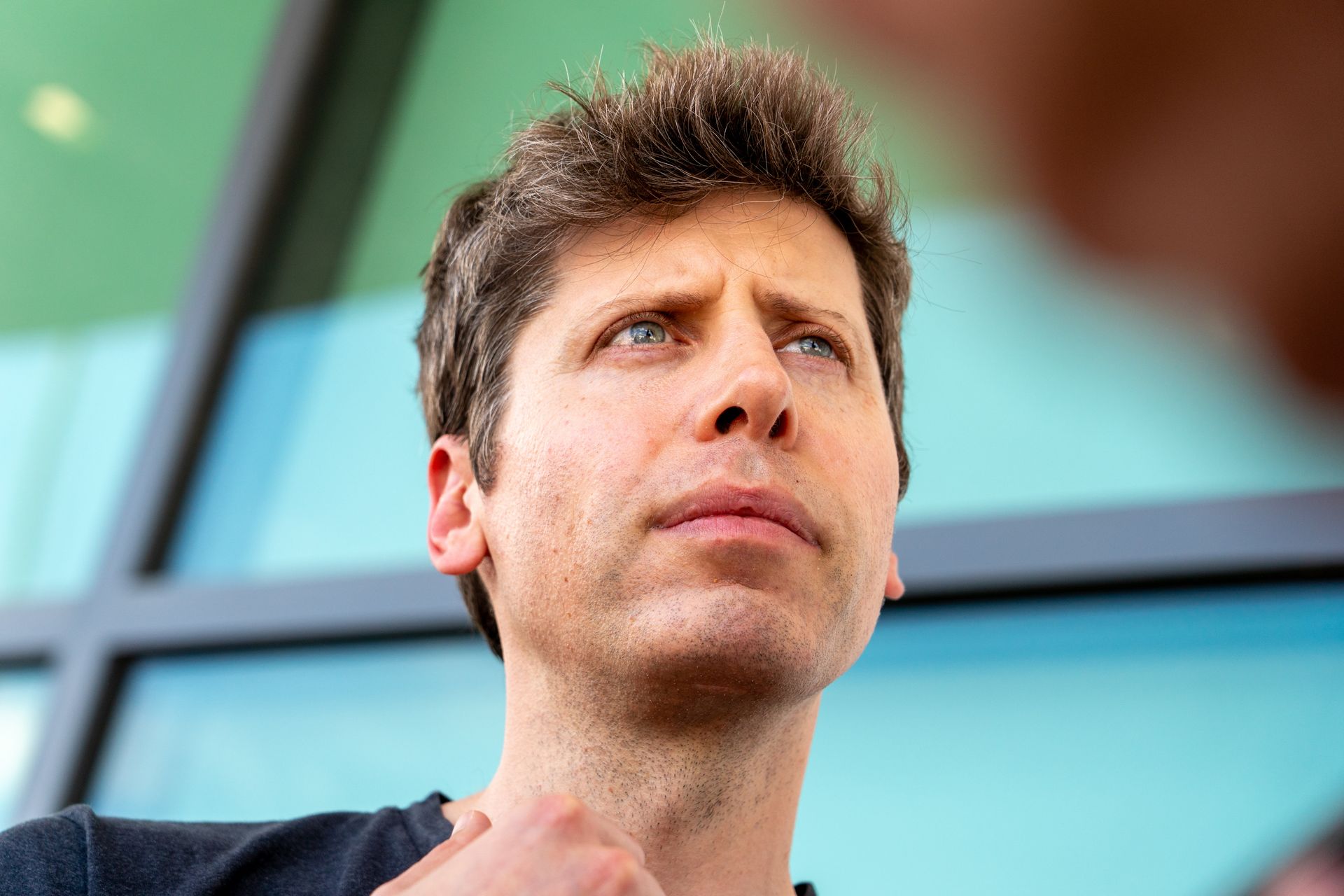
Kyle Grillot/Bloomberg via Getty Images
Sam Altman, CEO of OpenAI, is calling public concern over AI data center water consumption a "meme" that has no basis in fact. Speaking on the premiere episode of the Sources podcast with host Alex Heath, released Tuesday, Altman said water worries around AI don't hold "up to any scrutiny," according to Business Insider.
Altman pushed back on the characterization of data centers as outsized water consumers, contending that a modern large facility consumes no more water than a typical office building. "That has been a robust meme and difficult to disprove, but I don't think holds up to any scrutiny," he told the podcast, according to Business Insider.
He also compared ChatGPT's water footprint to that of California almonds, saying it takes 38,000 ChatGPT queries to consume as much water as producing a single almond in the state, according to CalMatters. Business Insider acknowledged it was unable to confirm the comparison on its own, though the outlet observed that the underlying figures point in the same direction: Altman has put the water cost of a typical ChatGPT query at roughly 0.32 milliliters, while a 2019 study by researchers affiliated with the U.S. Geological Survey pegged the water needed to grow one California almond at an average of 3.56 liters.
Experts say the data needed to evaluate those claims simply isn't available. Shaolei Ren, a professor of electrical and computer engineering at UC Riverside, told CalMatters that water consumption at any given facility is shaped by so many interacting factors — among them geographic location, ambient temperature, cooling technology, and the complexity of each query — that arriving at one representative number is simply not possible. "The information we have is so limited," Ren said, according to CalMatters.
Michael Kiparsky, who leads the Wheeler Water Institute at UC Berkeley's Center for Law, Energy, and the Environment, cited pending California legislation as a sign of how little is known. "There's no published data — certainly not for California — and what is public seems all over the place," Kiparsky told CalMatters.
Two bills requiring data centers to disclose their water use cleared the California legislature this month and have been sent to Gov. Gavin Newsom for his consideration, according to CalMatters. Newsom vetoed a similar measure last year.
The broader debate over data centers' resource demands has been intensifying across the country, with communities pushing back against new facilities over rising electricity costs and water consumption. According to Business Insider, a Gallup survey released in May showed that 71% of Americans opposed having a data center built in their community, with 70% pointing to environmental impact as a reason.
Altman said the industry bears responsibility for changing public opinion. "I think the right way to get people to like something is to deliver them value," he told the podcast, according to Business Insider.
Join 500,000+ readers who start their day with Quartz.
By subscribing, you agree to our Terms of Service and Privacy Policy.
Global business news for a smarter world
© 2026 Quartz Media, Inc. All rights reserved.