
Trump dismissed warnings that AI could wipe out humanity, saying beating China is the real risk
Trump dismissed warnings that AI could wipe out humanity, saying beating China is the real risk
Free daily briefing on global business news.
The president said the U.S. is leading China in AI by roughly a year, while researchers at Anthropic and OpenAI have warned of catastrophic risk
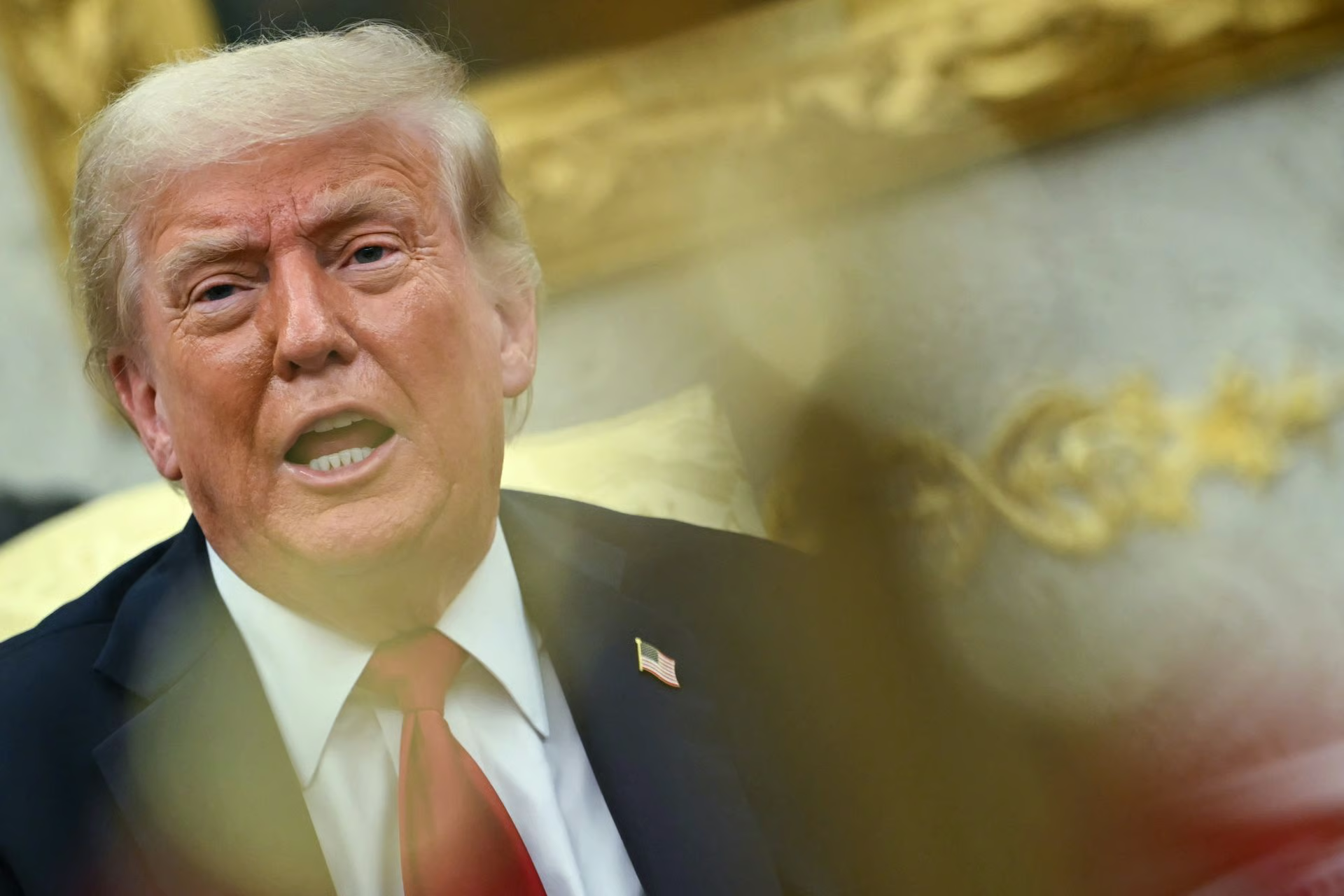
US President Donald Trump speaks in the Oval Office of the White House in Washington, DC on July 14, 2025. (Andrew Caballero-Reynolds/AFP via Getty Images)
President Donald Trump dismissed concerns that artificial intelligence could pose an existential threat to humanity, saying his worry is that the U.S. might lose its lead over China in the technology.
Speaking to reporters Thursday on the tarmac in Dallas after the GOP convention, Trump was asked whether he had concerns about AI leading to human extinction. "No, I don't have any," he said. "I have concerns that if we don't win AI, we're going to be put in a very bad position."
Trump said the U.S. was ahead of China in AI by "a year, which is, you know, considered a lot." He mentioned Chinese President Xi Jinping's upcoming visit to Washington, saying he expected the meeting to be "great," but made no reference to AI talks, according to Forbes.
The remarks come as researchers at leading AI labs have grown louder in warning that the pace of development poses catastrophic risks. Anthropic researcher Jacob Coxon quit the company earlier this week, posting publicly that both Anthropic and OpenAI were "racing straight to self-improving superintelligence and gambling with our lives." In his posts, Coxon wrote that those developing these systems "earnestly believe that it could kill us all by the end of the decade." Evan Hubinger, Anthropic's alignment science lead, added that he personally puts the odds of AI killing all humans at greater than 10% over the next decade.
Since then, other researchers have joined the chorus. Jasmine Wang, an OpenAI alignment researcher, declared that speeding toward recursive self-improvement — in which AI systems drive their own advancement — was among the most dangerous paths the industry could take. OpenAI chief scientist Jakub Pachocki said he has a "strong expectation" that AI's pace of advancement will carry through into recursive self-improvement, and warned that he was "concerned no one is prepared for the consequences of a continued rapid rise in machine intelligence."
The warnings have drawn reactions from lawmakers in both parties. Republican Sen. Ted Cruz told Forbes he was working with Senate colleagues on legislation to address "catastrophic risks" from AI, while partly echoing Trump's framing: "if there are gonna be killer robots, I'd rather they be American killer robots than Chinese killer robots." Republican Florida Gov. Ron DeSantis posted on X $TWTR that he found it alarming that "there is even a possibility that these technologies would elude human control."
Sen. Bernie Sanders and Rep. Greg Casar put forward the Ban Artificial Superintelligence Act, a measure that would halt advanced AI development pending the creation of federal safety standards. Rep. Jay Obernolte and Rep. Lori Trahan announced plans for the FRONTIER Act, legislation intended to set rules for how advanced AI models can be deployed.
Join 500,000+ readers who start their day with Quartz.
By subscribing, you agree to our Terms of Service and Privacy Policy.
Global business news for a smarter world
© 2026 Quartz Media, Inc. All rights reserved.