
Chevron's CEO warned that oil price buffers are gone and crude will keep rising
Chevron's CEO warned that oil price buffers are gone and crude will keep rising
Free daily briefing on global business news.
U.S. diesel hit a record $6 a gallon on Thursday as the Iran war and Ukrainian attacks on Russian refineries squeeze supply
PATRICK T. FALLON / Getty Images
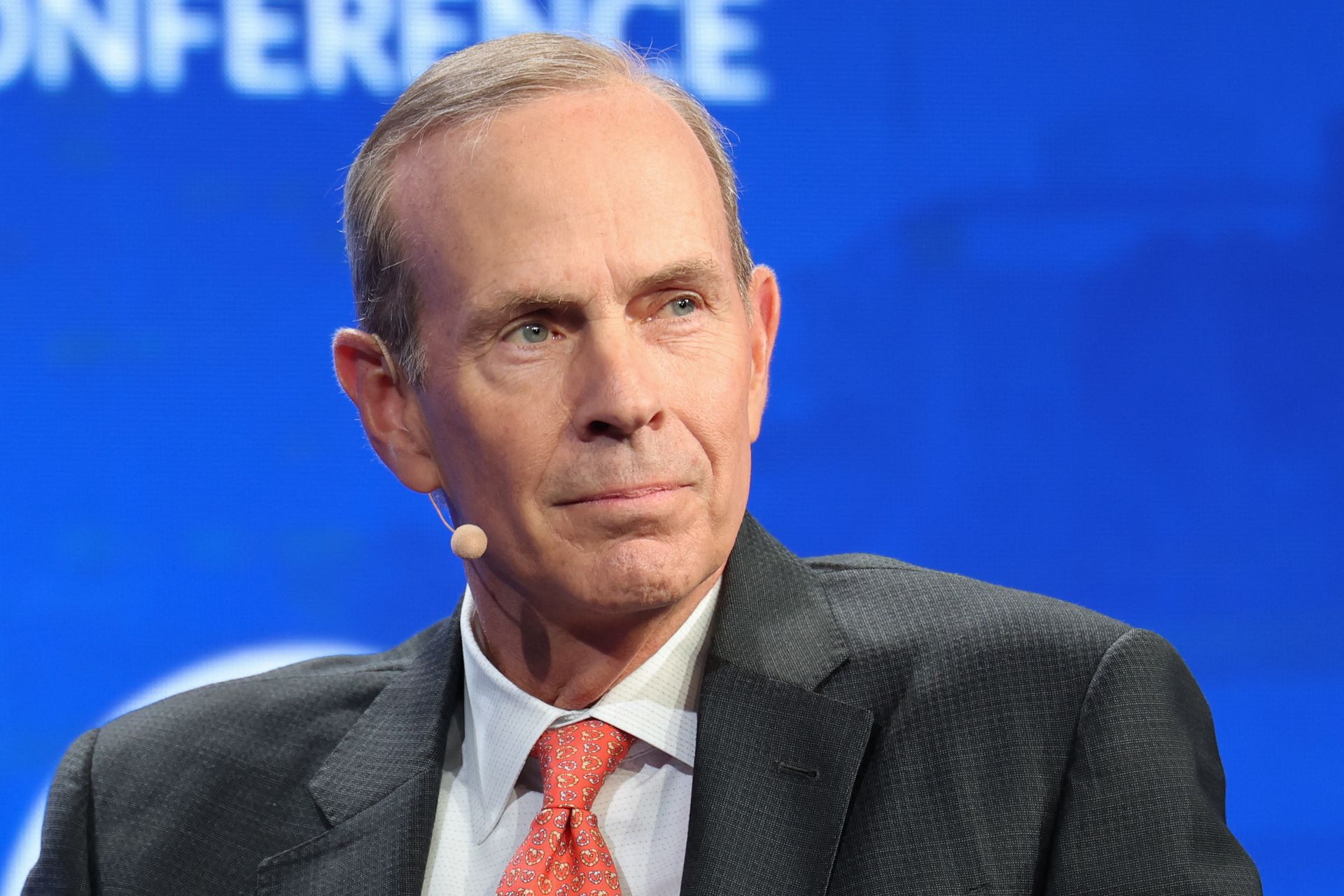
Chevron $CVX CEO Mike Wirth said Friday that the cushions that had prevented steeper oil price increases since the start of the Iran war have been exhausted, and that crude prices are more likely to rise than fall in the months ahead.
Speaking at a University of Texas at Austin energy conference, Wirth said countries had released crude stockpiles to the market after the conflict began in late February, and the U.S. had also lifted restrictions on oil stored on tankers from sanctioned countries. Those buffers have now been "played out," he said. "It's harder to envision a scenario where prices softens and quickly," Wirth said. "I think the risks remain to the upside over the next few months."
U.S. diesel prices crossed the $6-per-gallon threshold for the first time on Thursday, driven by the Iran war and Ukrainian drone strikes targeting Russian refining capacity. Brent crude futures pointed toward an 8% gain for the week.
Wirth also addressed Chevron's operations near the conflict zone. Wirth said the Trump administration had engaged Ukraine on the subject of its strikes against oil infrastructure in Russia's Black Sea region, and that Chevron had since experienced fewer disruptions to its operations there. The company's regional footprint includes the Tengiz oilfield in Kazakhstan and an ownership interest in the Caspian Pipeline Consortium, the export conduit that carries Tengiz crude westward to the Black Sea.
On Venezuela, Wirth said Chevron's planned $7 billion expansion will be funded entirely from cash generated by its three existing joint ventures in the country, with no outside capital brought in. Last week, Chevron signed new contract terms with the Venezuelan government, gaining access to two additional oil areas with a goal of more than doubling production to roughly 600,000 barrels per day by 2031, according to Reuters.
Friday's remarks extend a pattern of warnings Wirth has issued since the conflict began. In May, he warned of physical oil shortages tied to the closure of the Strait of Hormuz and drew comparisons to the energy crises of the 1970s. In late July, after Chevron posted its highest quarterly profit in at least six years, he said supply risks had spread beyond the strait, with Iran-backed Houthi forces drawing the Red Sea into the conflict.
The International Energy Agency, in a separate report on Friday, said global oil inventories fell by 95 million barrels in August alone, bringing cumulative draws since the war began to 507 million barrels.
Join 500,000+ readers who start their day with Quartz.
By subscribing, you agree to our Terms of Service and Privacy Policy.
Global business news for a smarter world
© 2026 Quartz Media, Inc. All rights reserved.