
Canada's Terrestar is joining a UAE-U.S. push to build a Starlink rival
Canada's Terrestar is joining a UAE-U.S. push to build a Starlink rival
Free daily briefing on global business news.
Global business news for a smarter world
© 2026 Quartz Media, Inc. All rights reserved.
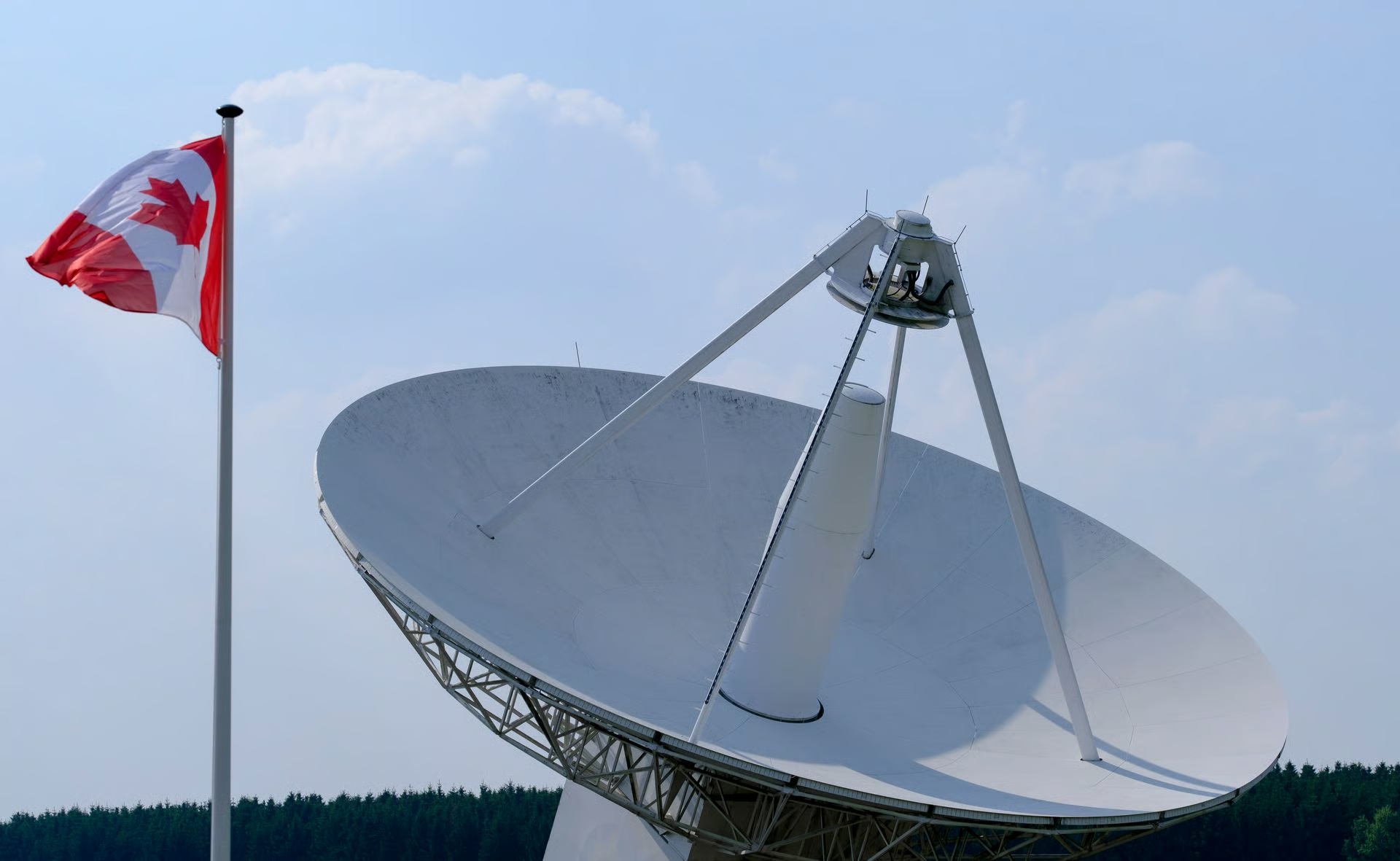
Montreal-based Terrestar signed a memorandum of understanding in Ottawa this week to work on shared satellite standards with Equatys
Thierry Monasse / Getty Images
Canada’s Terrestar Solutions has pledged to collaborate with the UAE’s Space42 and U.S.-based Viasat on a common, open set of technical rules that would let operators pool their satellite networks, according to Bloomberg. Montreal-based Terrestar, whose investors include Fortress Investment Group, will collaborate with Equatys, the venture Space42 and Viasat are forming, on standards that let their systems interoperate.
The companies signed a memorandum of understanding in Ottawa this week, during a visit by Abu Dhabi Crown Prince Sheikh Khaled bin Mohamed Al Nahyan, who met Canadian Prime Minister Mark Carney, according to Bloomberg. The framework means each participating operator holds “full ownership and control” over the assets it contributes, according to Bloomberg.
Space42 and Viasat signed a binding agreement in September to co-found Equatys, with up to $1 billion in combined equity commitments. The platform is designed to let operators share satellites and ground infrastructure to connect phones and other devices directly to satellites. Upon formation, Space42 and Viasat will each commit $400 million. Space42 is expected to add $200 million in a future funding round open to third-party investors.
The companies said formation of the venture remains subject to customary closing conditions, including regulatory approvals and the appointment of Viasat as prime technology contractor. Equatys is targeting the close of 2029 to have its first system deployed, according to Bloomberg.
Terrestar controls the Canadian portion of capacity on a geostationary satellite that EchoStar owns, and it partners with mobile network operators to shrink no-service zones in remote parts of Canada, according to Bloomberg. It plans a low-Earth orbit system called CaStar, and the first phase is projected to cost no less than C$500 million ($356 million), according to Bloomberg.
"It appeared obvious that building a LEO constellation on our own is not something that could be sustainable and viable," Terrestar CEO Jacques Leduc told Bloomberg.
Space42 Managing Director Karim Michel Sabbagh said Equatys wants to serve mobile users who move in and out of areas without coverage, according to Bloomberg. "We want to be able to appeal to all mobile users in the future who happen to go in and out non-covered areas as they travel between one place and the other," Sabbagh said.
Starlink is moving to become an independent mobile operator in the U.S., according to Bloomberg. Sabbagh said Equatys is competing for the direct-to-device market "with the conviction that we have a far more efficient and performing system."
SpaceX agreed earlier this month to acquire a nationwide 800 MHz spectrum portfolio from Grain Management. SpaceX said the purchase addresses a technical gap in its plans to launch a cellular service called Starlink Mobile. The transaction requires FCC approval before it can close.
Join 500,000+ readers who start their day with Quartz.
By subscribing, you agree to our Terms of Service and Privacy Policy.